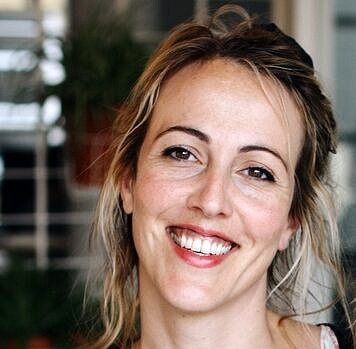
Alex Alvergne
My research focuses on the evolutionary ecology of women's health. I use theoretical frameworks from evolutionary biology to understand how female physiological and behavioral traits vary according to environmental, social and cultural contexts.
As a researcher in human evolutionary ecology, I propose an innovative approach to rethinking notions of "normality" and "pathology" (in the sense of Canguilhem, 1943) in the field of women's health. My research shows that many physiological variations, often medicalized as dysfunctions, may in fact be adaptive responses to specific environments.
My recent research focuses on:
- The impact of vaccination and infection on menstrual cycles
- Ecological and physiological determinants of contraceptive side effects
- The role of cultural transmission in the evolution of reproductive norms
I'm currently working on two questions:
- What are the developmental origins of endometriosis (EnDOHAD)? in collaboration with Montpellier University Hospital (Dr Noémie Ranisavljevic) and Simon Fraser University (Bernard Crespi), funded by the Endometriosis Research Foundation.
- What are the social-ecological determinants of menstrual health variation in Occitanie (ANR C-HEALTH project) in collaboration with Montpellier University Hospital (Dr Noémie RANISAVLJEVIC).
For more information on my scientific articles, see my Google Scholar page.

Can long Covid and vaccination really affect women's menstrual cycles and fertility?

Long COVID disrupts menstruation and vice versa
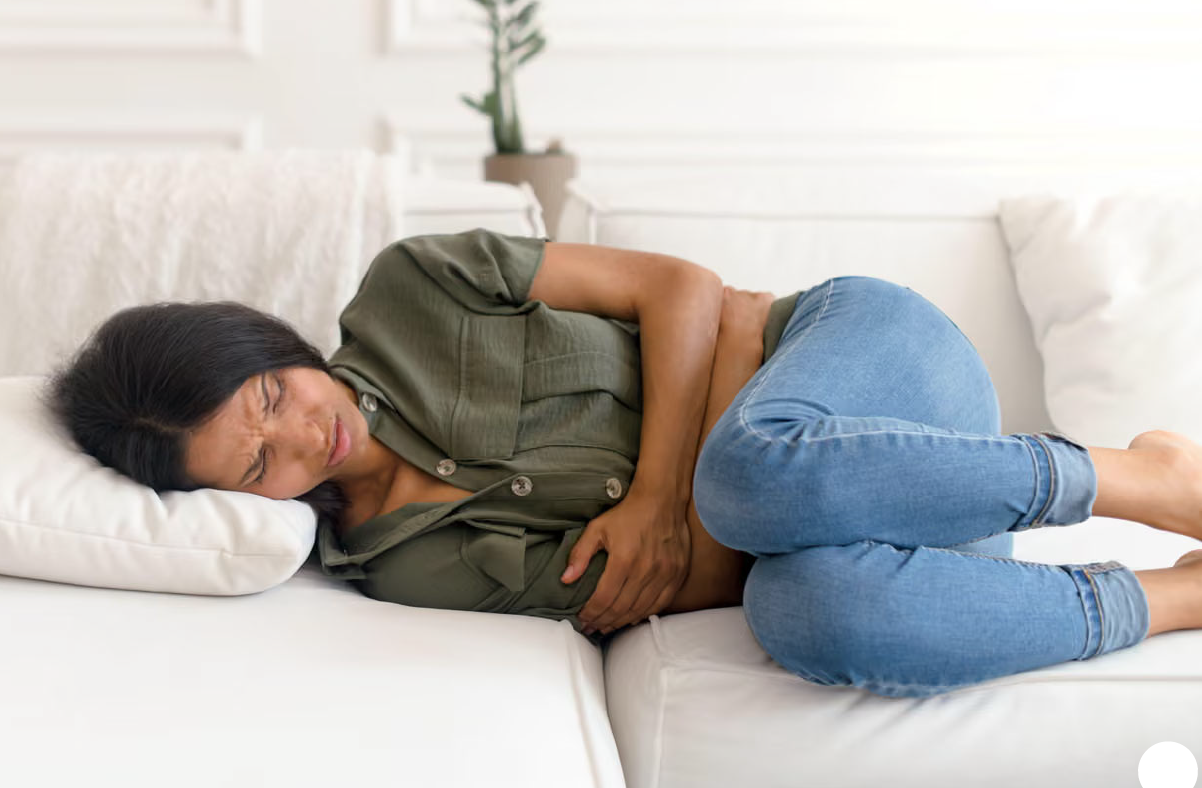
Long Covid linked to heavier periods and risk of iron deficiency

Long covid may be making your periods longer and heavier / New Scientist 16 sept 2025
The potential bidirectional relationship between long COVID and menstruation
Social clustering of preference for female genital mutilation/cutting in south-central Ethiopia
Menstrual cycle length changes following vaccination against influenza alone or with COVID-19
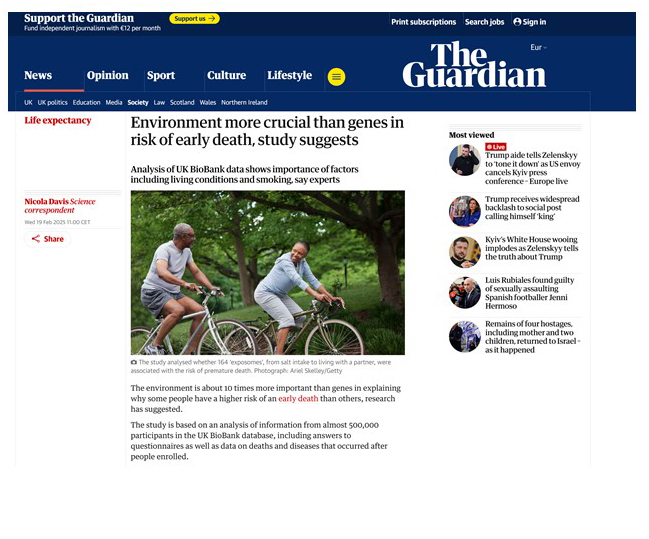
Environment more crucial than genes in risk of early death, study suggests
Low haemoglobin in arduous seasons is associated with reduced chance of ovulation among women living in the Bolivian altiplano
- 1
- 2
- Charlotte Faurie, Violaine Llaurens, Alexandra Alvergne, Marcel Goldberg, Marie Zins, et al.. Left-handedness and Male-Male Competition: Insights from Fighting and Hormonal Data. Evolutionary Psychology: an International Journal of Evolutionary Approaches to Psychology and Behavior, 2011, 9 (3), pp.354-370. ⟨hal-04023897⟩
- Alexandra Alvergne, Markus Jokela, Charlotte Faurie, Virpi Lummaa. Personality and testosterone in men from a high-fertility population. Personality and Individual Differences, 2010, 49 (8), pp.840-844. ⟨10.1016/j.paid.2010.07.006⟩. ⟨hal-04025987⟩
- Aurélie Célérier, Elise Huchard, Alexandra Alvergne, Delphine Féjan, Floriane Plard, et al.. Detective mice assess relatedness in baboons using olfactory cues. Journal of Experimental Biology, 2010, 213 (9), pp.1399-1405. ⟨10.1242/jeb.038349⟩. ⟨hal-04219547⟩
- Alexandra Alvergne, Charlotte Faurie, Michel Raymond. Are parents' perceptions of offspring facial resemblance consistent with actual resemblance? Effects on parental investment. Evolution and Human Behavior, 2010, 31 (1), pp.7-15. ⟨10.1016/j.evolhumbehav.2009.09.002⟩. ⟨hal-04025938⟩
- Alexandra Alvergne, Charlotte Faurie, Michel Raymond. Variation in testosterone levels and male reproductive effort: Insight from a polygynous human population. Hormones and Behavior, 2009, 56 (5), pp.491-497. ⟨10.1016/j.yhbeh.2009.07.013⟩. ⟨hal-04026042⟩
- Alexandra Alvergne, Charlotte Faurie, Michel Raymond. Father–offspring resemblance predicts paternal investment in humans. Animal Behaviour, 2009, 78 (1), pp.61-69. ⟨10.1016/j.anbehav.2009.03.019⟩. ⟨hal-04026008⟩
- Alexandra Alvergne, Ryo Oda, Charlotte Faurie, Akiko Matsumoto-Oda, Valérie Durand, et al.. Cross-cultural perceptions of facial resemblance between kin. Journal of Vision, 2009, 9 (6), pp.23-23. ⟨10.1167/9.6.23⟩. ⟨hal-04029036⟩
- Elise Huchard, Julio Benavides, Joanna Setchell, Marie Charpentier, Alexandra Alvergne, et al.. Studying shape in sexual signals: the case of primate sexual swellings. Behavioral Ecology and Sociobiology, 2009, 63 (8), pp.1231-1242. ⟨10.1007/s00265-009-0748-z⟩. ⟨hal-02079550⟩
- Alexandra Alvergne, Elise Huchard, Damien Caillaud, Marie Charpentier, Joanna Setchell, et al.. Human Ability to Recognize Kin Visually Within Primates. International Journal of Primatology, 2009, 30 (1), pp.199-210. ⟨10.1007/s10764-009-9339-0⟩. ⟨hal-02079548⟩
- Alexandra Alvergne, Charlotte Faurie, Michel Raymond. Developmental plasticity of human reproductive development: Effects of early family environment in modern-day France. Physiology & behavior, 2008, 95 (5), pp.625-632. ⟨10.1016/j.physbeh.2008.09.005⟩. ⟨hal-04026864⟩
Documents retrieved from the HAL open archive