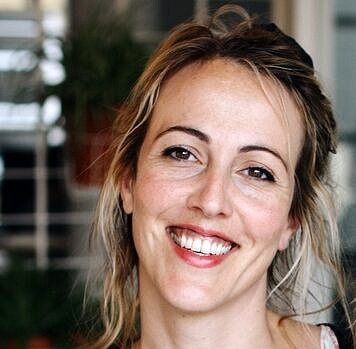
Alex Alvergne
Ma recherche porte sur l'écologie évolutive de la santé des femmes. J'utilise les cadres théoriques de la biologie de l'évolution pour comprendre comment les traits physiologiques et comportementaux féminins varient selon les contextes environnementaux, sociaux et culturels.
En tant que chercheuse en écologie évolutive humaine, je propose une approche novatrice pour repenser les notions de "normalité" et de "pathologie" (au sens de Canguilhem, 1943) dans le domaine de la santé féminine. Ma recherche démontre que de nombreuses variations physiologiques, souvent médicalisées comme des dysfonctionnements, peuvent en réalité constituer des réponses adaptatives à des environnements spécifiques.
Mes recherches récentes concernent:
- L'impact de la vaccination et de l'infection sur les cycles menstruels
- Les déterminants écologiques et physiologiques des effets secondaires de la contraception
- Le rôle de la transmission culturelle pour l'évolution des normes sur la reproduction
Je travaille actuellement sur deux questions:
- Quells sont les origines développementales de l'endométriose (EnDOHAD)? en collaboration avec le CHU de Montpellier (Dr Noémie Ranisavljevic) et Simon Fraser University (Bernard Crespi), financé par la fondation pour la recherche sur l'endométriose.
- Quels sont les déterminants sociaux-écologiques de la variation de la santé menstruelle en Occitanie (projet ANR C-HEALTH) en collaboration avec le CHU de Montpellier (Dr Noémie RANISAVLJEVIC).
Pour plus d'information sur mes articles scientifiques, voir ma page Google Scholar

Le Covid long et la vaccination peuvent-ils réellement affecter le cycle menstruel et la fertilité des femmes ?

Le covid long perturbe les menstruations et inversement

Long Covid linked to heavier periods and risk of iron deficiency

Long covid may be making your periods longer and heavier / New Scientist 16 sept 2025
The potential bidirectional relationship between long COVID and menstruation
Social clustering of preference for female genital mutilation/cutting in south-central Ethiopia
Menstrual cycle length changes following vaccination against influenza alone or with COVID-19
Environment more crucial than genes in risk of early death, study suggests
Low haemoglobin in arduous seasons is associated with reduced chance of ovulation among women living in the Bolivian altiplano
- 1
- 2
- Abigail Fraser, Cathy Johnman, Elise Whitley, Alexandra Alvergne. The evolutionary ecology of age at natural menopause: implications for public health. Evolutionary Human Sciences, 2020, 2, ⟨10.1017/ehs.2020.59⟩. ⟨hal-03092086⟩
- Frédéric Thomas, Mathieu Giraudeau, François Renaud, Beata Ujvari, Benjamin Roche, et al.. Can postfertile life stages evolve as an anticancer mechanism?. PLoS Biology, 2019, 17 (12), pp.e3000565. ⟨10.1371/journal.pbio.3000565⟩. ⟨hal-02445900⟩
- Jeremy Koster, Dieter Lukas, David Nolin, Eleanor Power, Alexandra Alvergne, et al.. Kinship ties across the lifespan in human communities. Philosophical Transactions of the Royal Society B: Biological Sciences, 2019, 374 (1780), pp.20180069. ⟨10.1098/rstb.2018.0069⟩. ⟨hal-03092099⟩
- Marina Voinson, Alexandra Alvergne, Sylvain Billiard, Charline Smadi. Stochastic dynamics of an epidemic with recurrent spillovers from an endemic reservoir. Journal of Theoretical Biology, 2018, 457, pp.37 - 50. ⟨10.1016/j.jtbi.2018.08.017⟩. ⟨hal-01882987⟩
- Sylvain Billiard, Alexandra Alvergne. Stochasticity in cultural evolution: a revolution yet to happen. History and Philosophy of the Life Sciences, 2018, 40 (1), ⟨10.1007/s40656-017-0173-y⟩. ⟨hal-01712243⟩
- Alexandra Alvergne, Jenkinson Crispin, Charlotte Faurie. Evolutionary thinking in medicine: from research to policy and practice. Springer, 2016, Advances in the Evolutionary Analysis of Human Behaviour. ⟨hal-04028875⟩
- Marina Voinson, Sylvain Billiard, Alexandra Alvergne. Beyond Rational Decision-Making: Modelling the Influence of Cognitive Biases on the Dynamics of Vaccination Coverage. PLoS ONE, 2015, 10 (11), pp.e0142990. ⟨10.1371/journal.pone.0142990⟩. ⟨hal-01240002⟩
- Alexandra Alvergne, Fanny Perreau, Allan Mazur, Ulrich Mueller, Michel Raymond. Identification of visual paternity cues in humans. Biology Letters, 2014, 10 (4), pp.20140063. ⟨10.1098/rsbl.2014.0063⟩. ⟨hal-03008028⟩
- Alexandra Alvergne, Charlotte Faurie. Les traits d'histoire de vie. Thomas, F.; Raymond, M. Santé, médecine et sciences de l'évolution: une introduction, De Boeck, pp.83-123, 2013. ⟨hal-04028898⟩
- Jeanne Bovet, Julien Barthes, Valérie Durand, Michel Raymond, Alexandra Alvergne. Men’s Preference for Women’s Facial Features: Testing Homogamy and the Paternity Uncertainty Hypothesis. PLoS ONE, 2012, 7 (11), pp.e49791. ⟨10.1371/journal.pone.0049791⟩. ⟨hal-04136501⟩
Documents récupérés de l'archive ouverte HAL